AI is already changing how software gets built. Engineering teams are using AI coding tools to write code faster, generate tests, understand unfamiliar codebases, review changes, debug issues, and reduce time spent on routine tasks.
In many cases, the productivity gains are real. In our AI Readiness work, we have seen daily engineering output increase by 2.6× once AI usage became a natural part of the workday. That is a powerful productivity signal. The same team can suddenly produce significantly more than before, which means AI is no longer just a nice-to-have tool for developers. It has become a real lever for engineering performance.
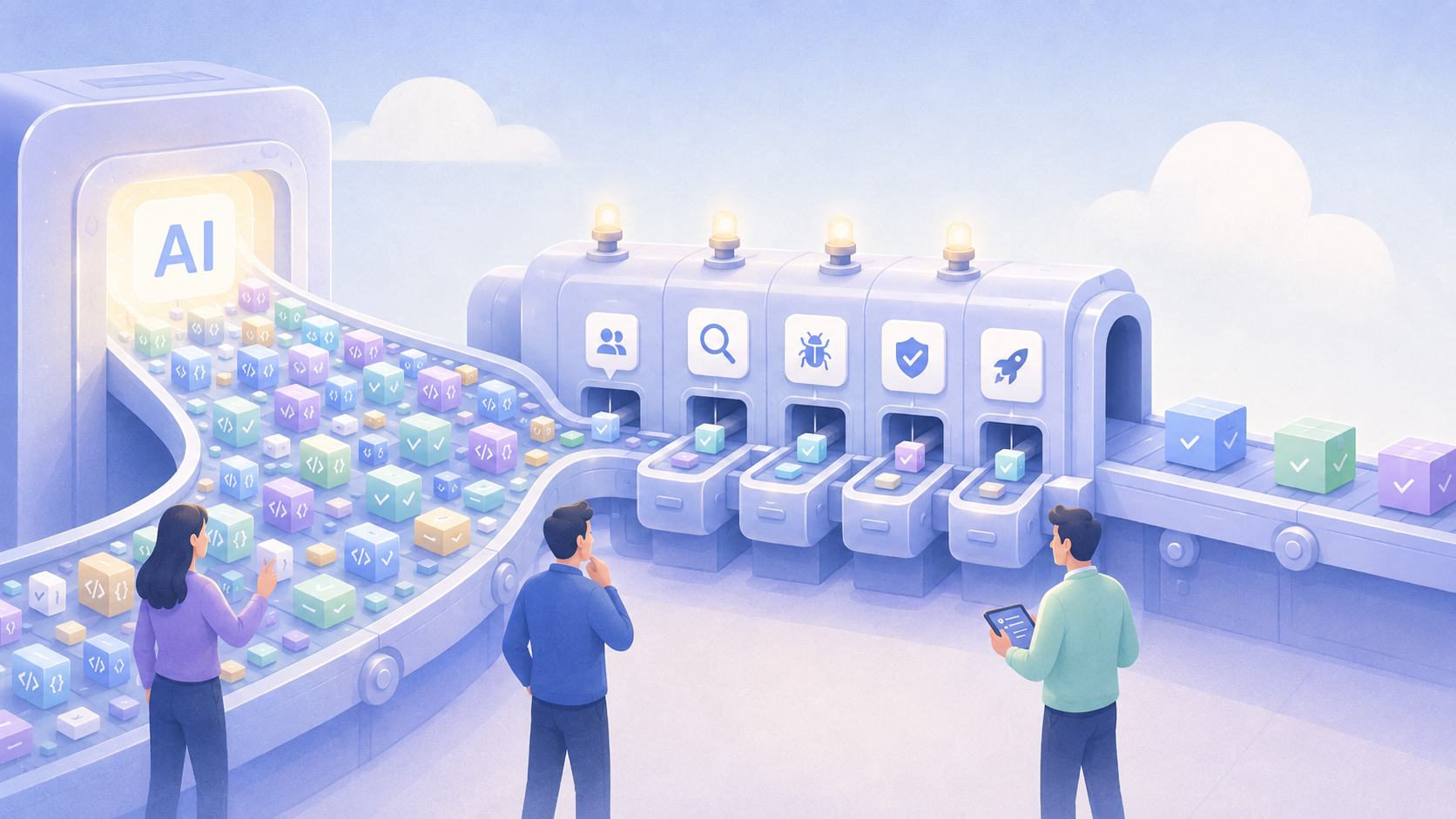
But it also revealed something critical: AI did not remove the bottleneck. It moved it.
More output does not automatically mean more shipped software
When AI first enters an engineering team, the focus is almost always on the individual developer. Can they write code faster? Complete tasks with less friction? Spend less time on boilerplate? These are relevant questions, but they are not enough.
Software delivery is not just about producing code. Every change still has to move through an entire system: review, testing, quality assurance, security checks, approval, merging, and release. AI can dramatically increase the amount of work entering that system. But if the delivery system itself does not scale at the same pace, the business fails to capture the full value.
That is exactly what we observed. Output rose sharply, but the delivery flow did not keep up. Review depth dropped from an average of 4.1 comments per change to 1.5. This is not just a technical metric. It is a warning sign that the system may be under pressure.
When output increases while reviews become shallower, it usually means one of three things: the process has genuinely improved, teams are handling higher volume with less scrutiny, or the organization is creating hidden risk by pushing more work through a system that was not built for it. The difference matters.
The hidden risk of AI adoption
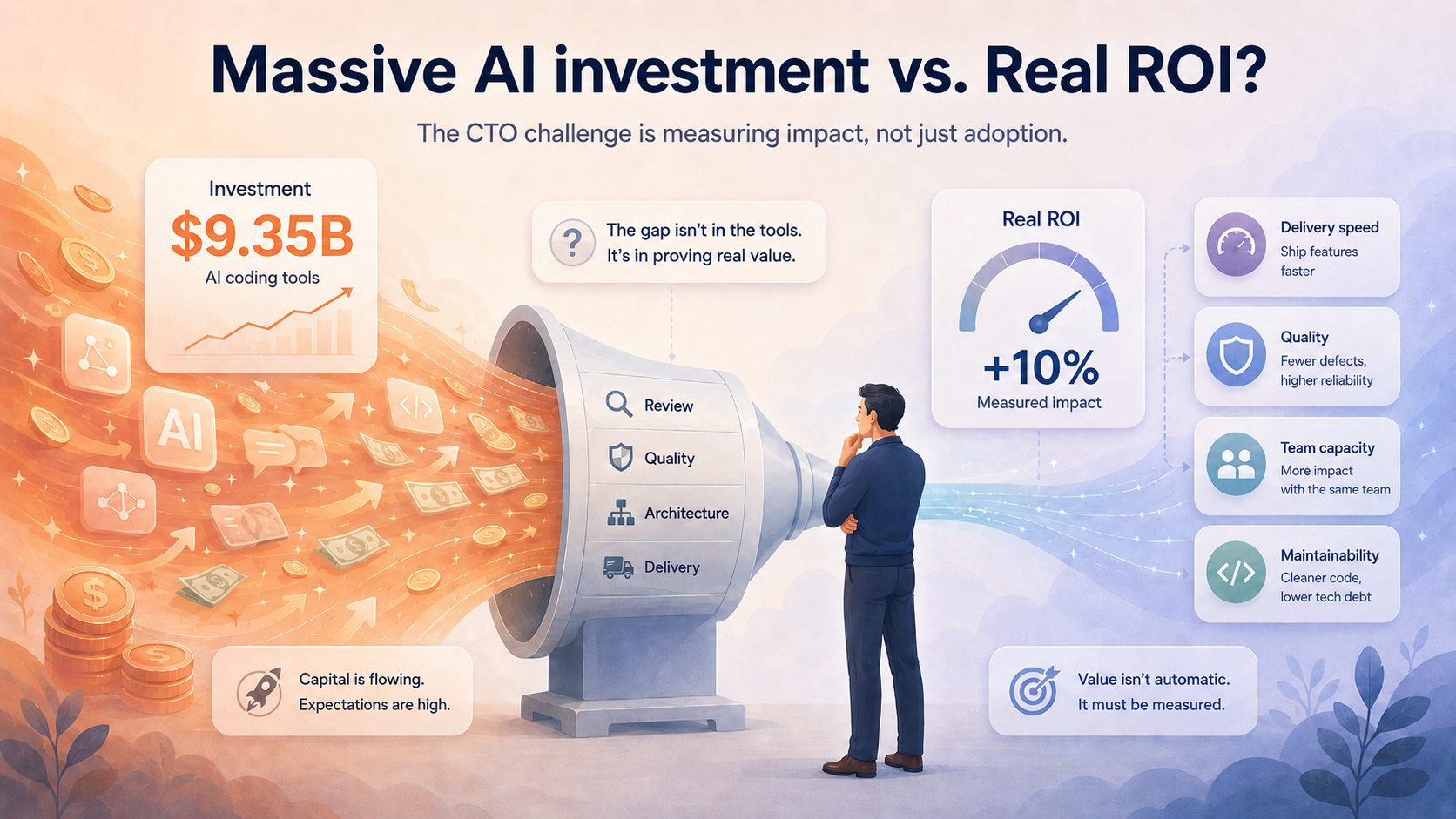
The biggest risk with AI in software engineering is not that developers are using the tools. It is that leadership mistakes increased activity for real business value.
A team can write more code without shipping faster. They can open more pull requests and still miss delivery targets. They can produce more changes while putting greater pressure on senior engineers. They can adopt AI widely and still struggle to turn that extra output into customer value.
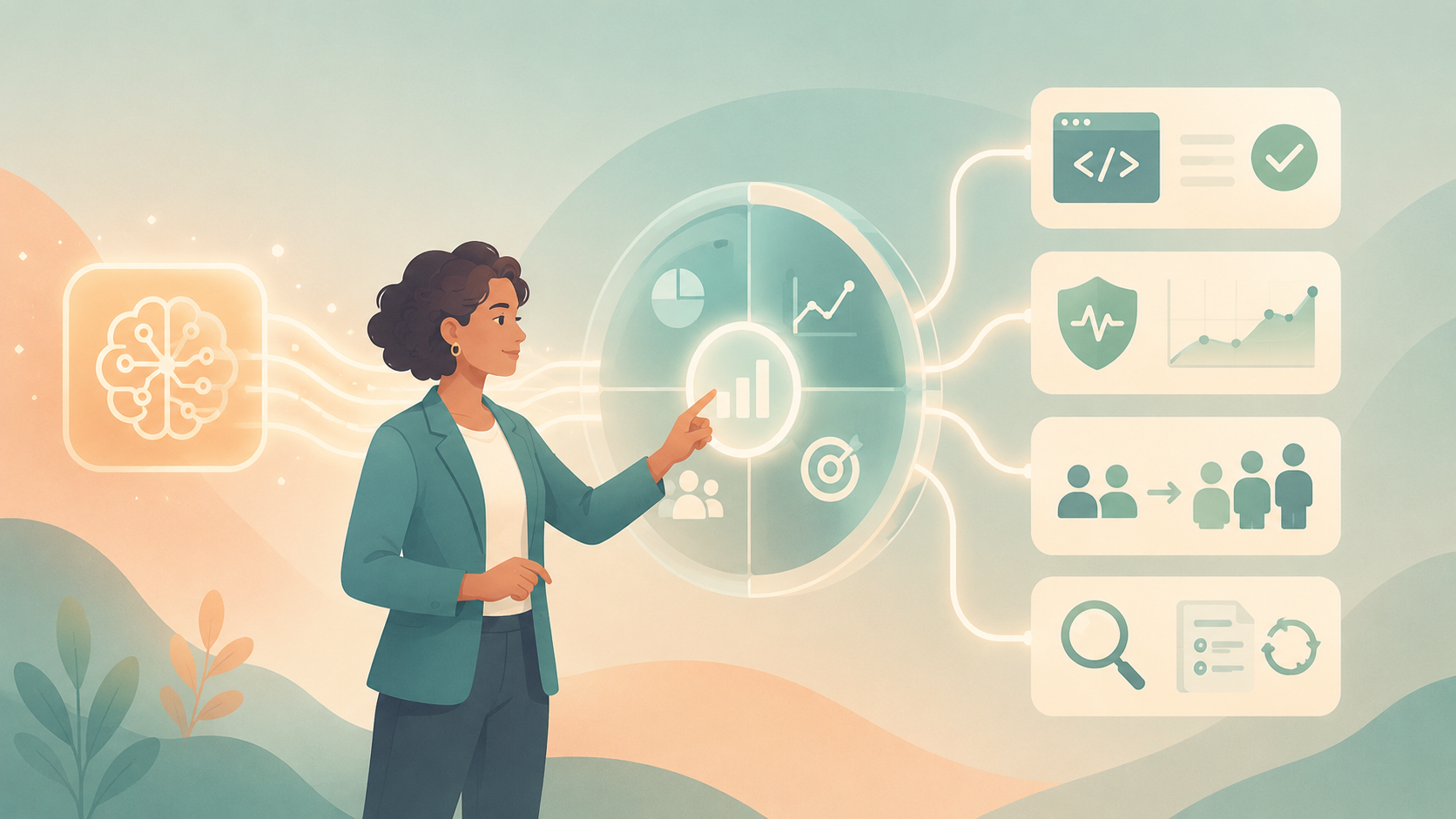
This is why AI Readiness is not primarily about giving developers access to tools or measuring usage. It is about whether the entire engineering organization can handle the new speed AI creates.
Can teams review faster without sacrificing quality? Can they test reliably? Can they maintain stable quality levels? Can they release safely? Can they avoid overloading senior engineers? Most importantly, can they convert more output into actually shipped software?
Many companies get stuck at this point. They roll out AI tools, see positive productivity numbers, celebrate high adoption rates, and forget to adapt the delivery system to the new reality. That creates business risk.
When the bottleneck moves, the risk profile changes
If AI increases production but the delivery system does not scale, several problems emerge. Work piles up unmerged, creating a false sense of progress. Critical bug fixes and security patches can still take just as long as before. Quality control becomes thinner as the same reviewers handle far more volume. Senior engineers risk becoming the new bottleneck because they are expected to approve everything.
Leadership also loses visibility. It becomes difficult to tell whether AI is truly improving delivery or simply increasing activity. The organization may look faster because more work is being created, but the business may not see faster delivery, safer releases, or more customer value.
This is the difference between AI adoption and real AI ROI.
How engineering systems must evolve
The companies that succeed with AI are not necessarily the ones that adopt coding tools the fastest. They are the ones that redesign their engineering processes to match the new pace of work.
This requires stronger automated testing and QA. Manual testing alone cannot serve as the main safety net when the volume of changes increases. It also requires smarter review flows, with smaller changes, AI-assisted reviews, and exception rules for low-risk work.
Engineering knowledge also needs to become more accessible to AI agents. Architecture, domain expertise, security rules, and coding standards all shape whether generated code actually fits the system. Without that context, AI can increase output while still creating more review burden, more rework, or more hidden risk.
Finally, companies need better automation infrastructure. AI cannot remain only a personal tool on a developer's laptop. To create real delivery impact, it needs to become an integrated part of the delivery pipeline, with clear governance, quality checks, and visibility into how work moves from idea to release.
The question leadership should really be asking
The question is no longer: "Are our developers using AI?". That question is too small.
The real question is:
Can our engineering organization turn AI-generated output into shipped, secure, and valuable software consistently and measurably?
Only the organization can make delivery faster. Only a well-designed system can convert more code into customer value. AI creates leverage, but leadership is responsible for seeing where that leverage gets stuck and what needs to change.
The companies that win the next phase of AI in software engineering will be the ones that convert increased productivity into real delivery performance while maintaining quality, reducing bottlenecks, and building a system where AI becomes a natural and safe part of the machinery.
AI did not remove the bottleneck. It moved it. The organizations that understand where it moved are the ones that will unlock the next level of engineering performance.