Many engineering organizations have already rolled out AI coding assistants.
Developers are using them to write code faster, generate tests, explain unfamiliar code, and reduce repetitive work. In many teams, the first signs of productivity improvement are already visible.
But this creates an important question for CTOs and engineering leaders:
Is your organization simply adopting AI tools, or is it truly ready for AI to change how software gets delivered?
That distinction matters.
AI adoption means teams are using AI tools in their daily work. It usually starts at the individual developer level: code completion, test generation, debugging support, documentation help, or faster exploration of unfamiliar systems.
AI readiness is different.
AI readiness means the engineering environment around those developers is mature enough for AI to take on larger, more complex work safely, consistently, and at scale.
In other words, adoption is about tool usage. Readiness is about whether your delivery system can absorb and benefit from significantly more AI-driven work.
Why adoption alone is not enough
The first wave of AI usage in engineering has mostly focused on individual productivity.
Developers can move faster, generate more output, and reduce some of the friction in day-to-day coding.
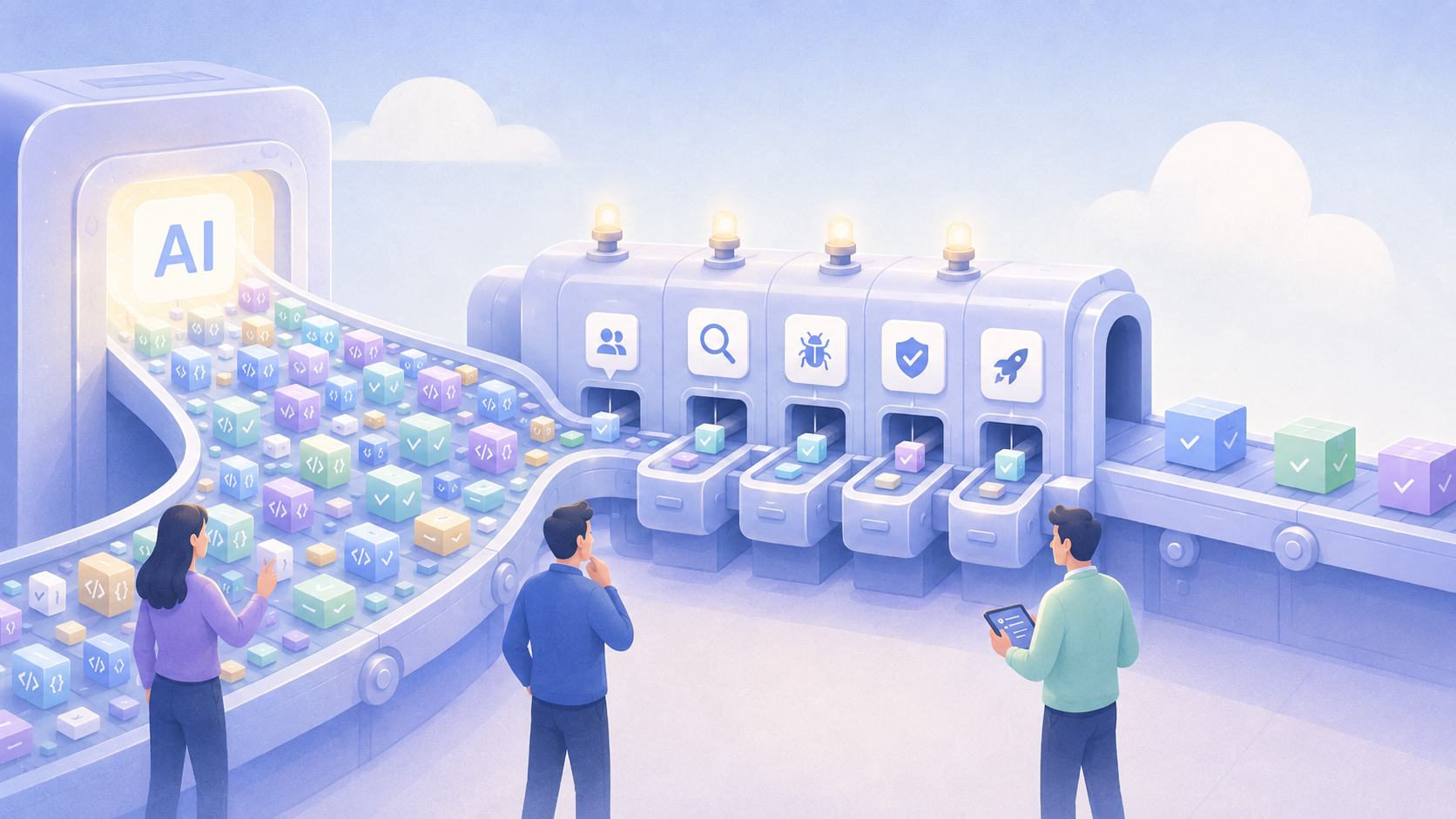
But as AI usage increases, many organizations discover a new problem: the bottleneck moves.
It is no longer only about how fast code can be written.
The real constraint becomes everything around the code: review, validation, architecture alignment, security, compliance, deployment, documentation, and long-term maintainability.
If those systems are weak, AI can increase output without increasing real delivery capacity. In some cases, it can even create more review burden, more quality risk, and more technical debt.
This is why AI readiness is becoming one of the most important engineering leadership questions.
The challenge is not simply: "Are our developers using AI?"
The better question is: "Is our engineering environment ready for AI to contribute more meaningfully to delivery?"
The real leap: from AI-assisted coding to AI-driven delivery
AI coding assistants are useful, but they are only the first step.
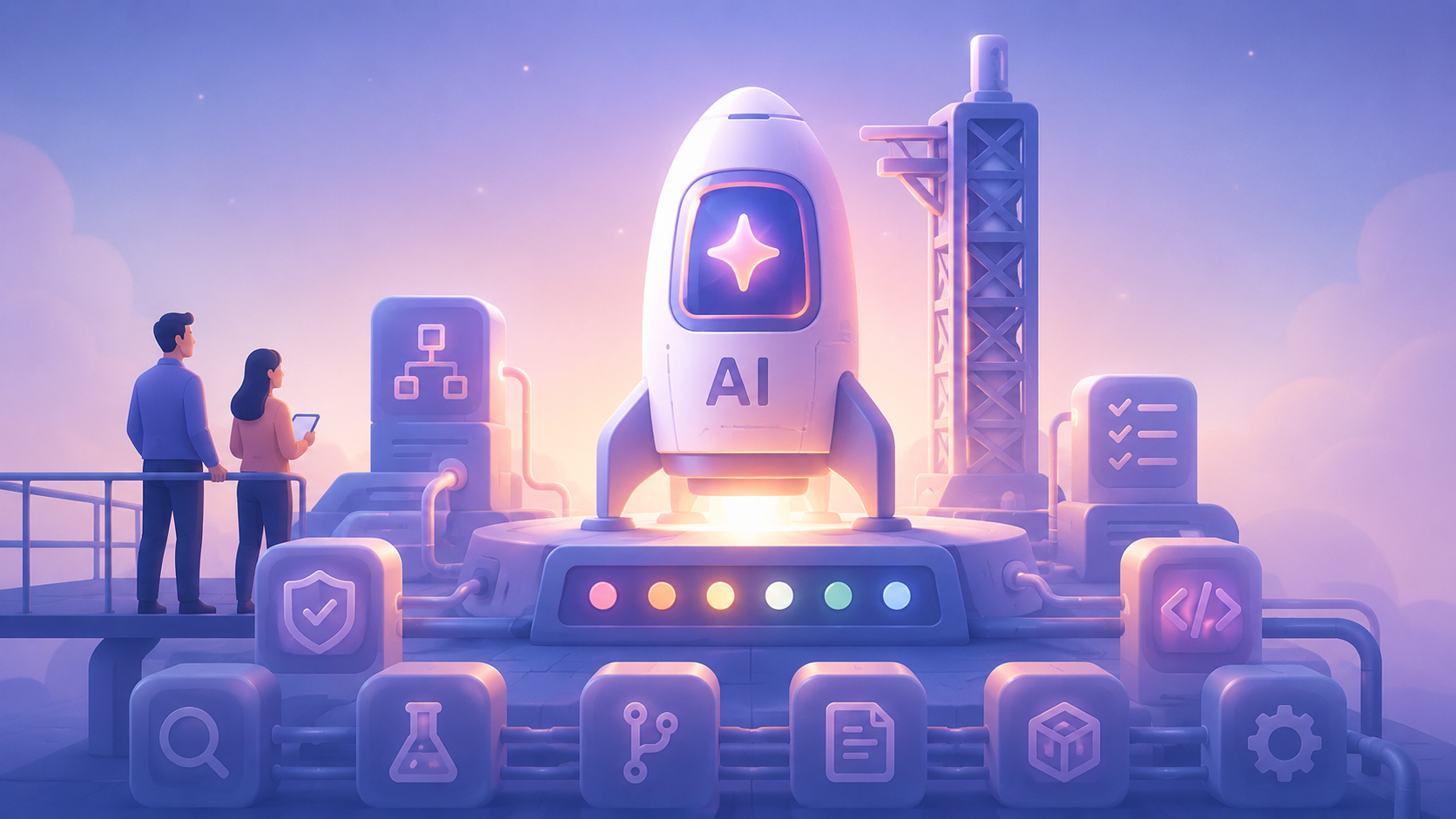
The bigger opportunity is moving from AI-assisted coding toward AI-driven delivery. That means AI is not just helping individuals move faster, but supporting broader parts of the software delivery lifecycle.
For that to happen, engineering organizations need stronger foundations.
AI needs access to reliable context. It needs clear conventions. It needs robust validation. It needs safe delivery processes. It needs systems that can detect when something is wrong before it reaches production.
Without those foundations, AI remains limited to smaller, lower-risk tasks.
With those foundations in place, AI can start to support more complex changes, accelerate delivery, and reduce operational friction across teams.
A practical AI Readiness Checklist for CTOs and engineering leaders
Delivery Flow
Are your review, merge, and handoff processes frictionless enough for AI-generated changes at scale?
If code review is slow, inconsistent, or overloaded, more AI-generated output may not translate into faster delivery. Instead, it can create a larger queue of changes waiting for human validation.
AI readiness requires clear ownership, efficient review practices, predictable merge processes, and delivery workflows that can handle higher throughput without creating chaos.
Quality & Validation
Are your testing, QA, and safety rails robust enough to handle significantly more AI output?
As AI increases the volume and speed of code creation, quality systems become even more important. Automated tests, CI/CD checks, security scans, monitoring, and QA practices need to provide confidence that changes are safe.
Weak validation limits how much responsibility AI can take on. Strong validation creates the safety net required for AI to support more meaningful delivery work.
Knowledge Accessibility
Is codebase context, architecture, conventions, and documentation consistent and easily available for AI agents?
AI performs better when the surrounding knowledge environment is clear. If architecture decisions, coding standards, ownership models, and domain logic are scattered or undocumented, AI will struggle to produce work that fits the system.
Knowledge accessibility is not just a documentation problem. It is a delivery acceleration problem.
The more structured and accessible your engineering knowledge is, the more effectively AI can operate within your environment.
Automation Blockers
Have you identified and removed the technical, process, or governance issues limiting AI's impact?
Many organizations have hidden blockers that prevent AI from scaling beyond individual productivity. These may include manual release steps, unclear approval processes, fragile legacy systems, missing test coverage, inconsistent environments, or security constraints that are not well integrated into delivery workflows.
AI readiness requires identifying these blockers and addressing the ones that limit progress the most.
Risk Management
Can your systems maintain quality, security, and compliance as AI takes on more responsibility?
For AI to support larger parts of engineering delivery, leaders need confidence that risk is being managed. This includes code quality, data security, compliance requirements, dependency management, auditability, and production reliability.
The more responsibility AI takes on, the more important governance becomes.
Good risk management does not slow AI down. It creates the conditions for AI to be used safely at greater scale.
What CTOs should focus on next
The organizations that benefit most from AI will not simply be the ones with the highest tool adoption.
They will be the ones that build the strongest environment around AI.
That means understanding where the current delivery system is ready, where it is fragile, and which improvements will unlock the highest leverage.
For some teams, the priority may be improving test coverage. For others, it may be reducing review bottlenecks, cleaning up documentation, standardizing engineering practices, or identifying automation blockers across the delivery lifecycle.
The important point is that AI readiness is not a generic maturity exercise. It is a practical way to understand what needs to improve so AI can contribute more safely and effectively.
From "we use AI" to "we are ready for AI"
The gap between "we use AI" and "our systems are truly ready for AI to drive more of our delivery" is one of the biggest hidden challenges in engineering organizations right now.
Using AI tools is no longer the hard part.
The harder and more valuable work is making sure the engineering environment is ready for what comes next.
Organizations that close this gap will be better positioned to turn AI from an individual productivity tool into a real delivery advantage.