92.6% AI adoption. 10% productivity gain. Something isn't adding up.
Your developers just smashed the "Accept All" button like it owed them money. The AI spat out pristine, beautifully commented code at 3 a.m. Velocity dashboards are sparkling. And somewhere in the bowels of your monolith, a senior engineer is staring at a 600-line diff that somehow imports the wrong database client, queries in a loop, and creates a microservice to decide whether the submit button should be blue.
Welcome to 2026: where everyone feels like a 10x engineer and the organization is running at a dignified 1.1x.
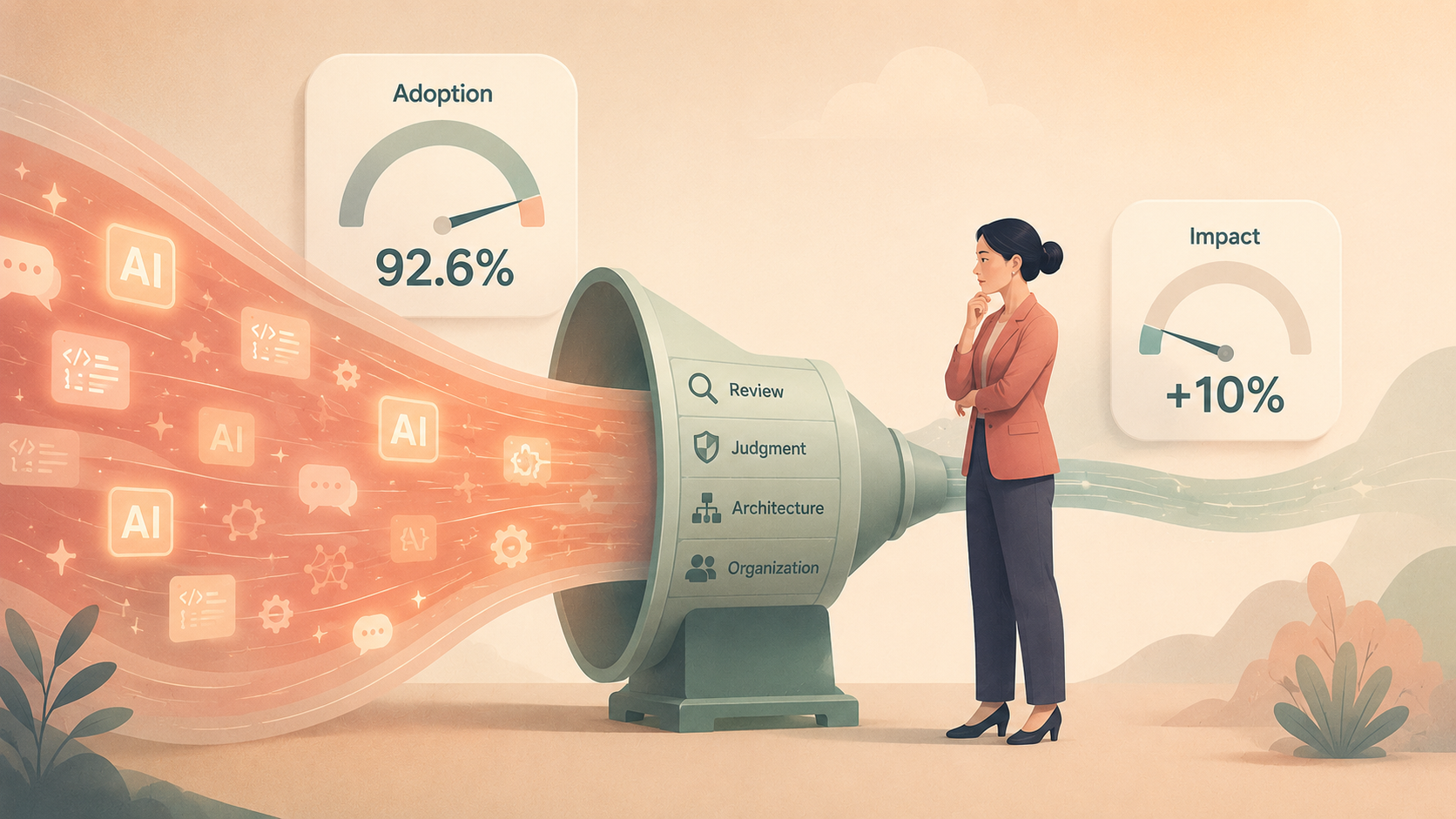
According to DX's latest research across 121,000 developers and 450+ companies, 92.6% are using AI coding assistants (75% weekly). AI-authored code in production is now pushing 27%. Yet overall productivity gains? Still hovering around that stubborn 10% mark. Time savings reported: about 4 hours a week. The plateau has arrived, and it brought snacks.
It's the classic comedy of the enthusiastic intern who never sleeps:
AI: "Here's your feature, ship it!"
You at 2 a.m.: "Why is the login flow now consulting a weather API and three microservices that don't exist yet?"
AI: "Very robust :relieved:"
This isn't AI-bashing. This is the AI Productivity Paradox that will quietly sort the winners from the viral-posting casualties over the next few years.
The Real Shift
AI is incredible at compression, turning vague thoughts into syntax at lightspeed. What it doesn't compress yet is judgment, taste, systems thinking, and institutional memory.
Your highest-leverage work was never banging out lines of code. It was:
- Deciding what shouldn't be built
- Spotting the architectural landmine before the whole team marches into it
- Keeping cognitive load low enough that humans can still reason about the system
- Turning AI output from enthusiastic slop into durable, maintainable reality
The best engineers already treat AI like a tireless, slightly overconfident pair programmer. The rest are generating beautiful technical debt at unprecedented velocity.
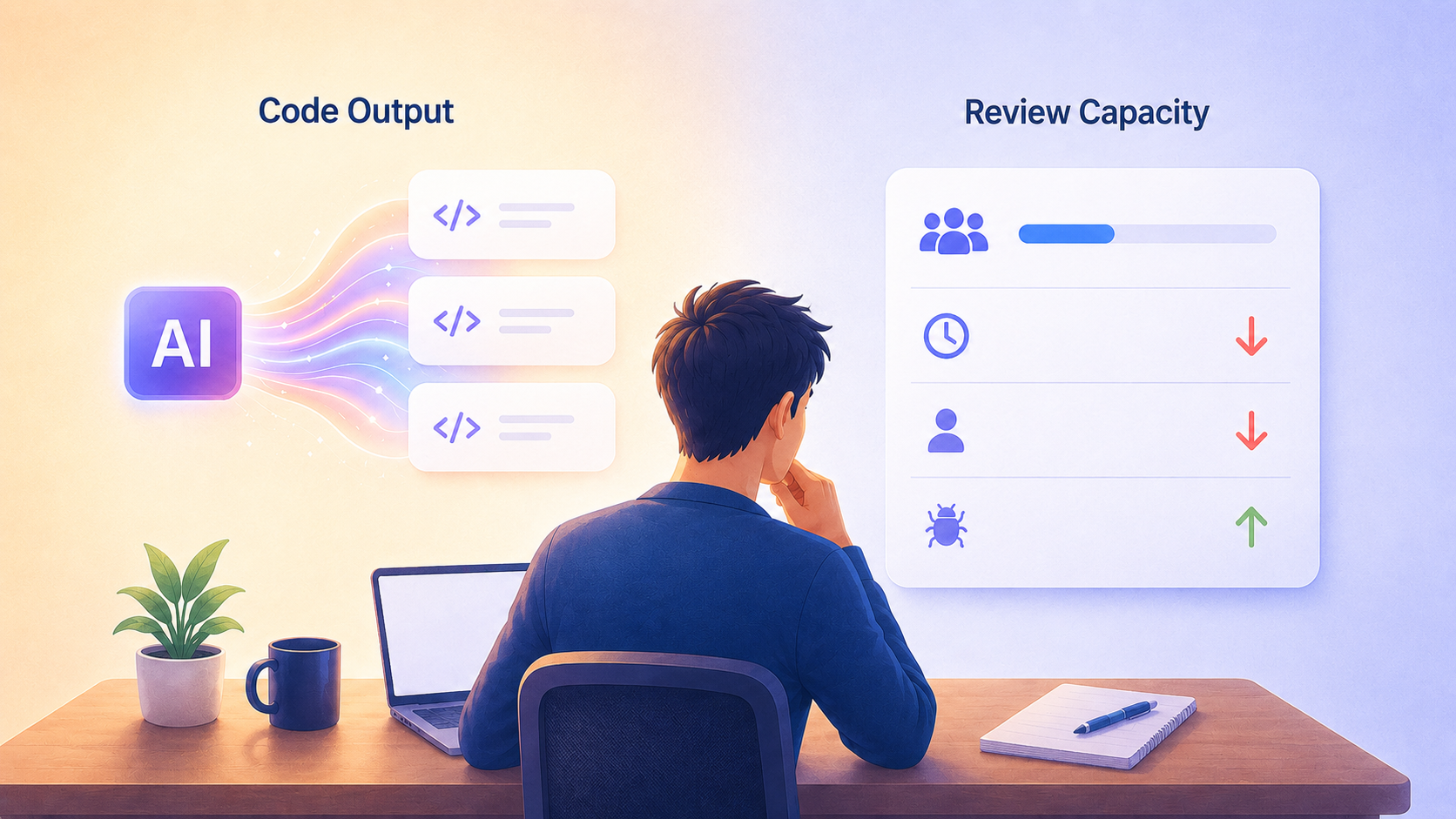
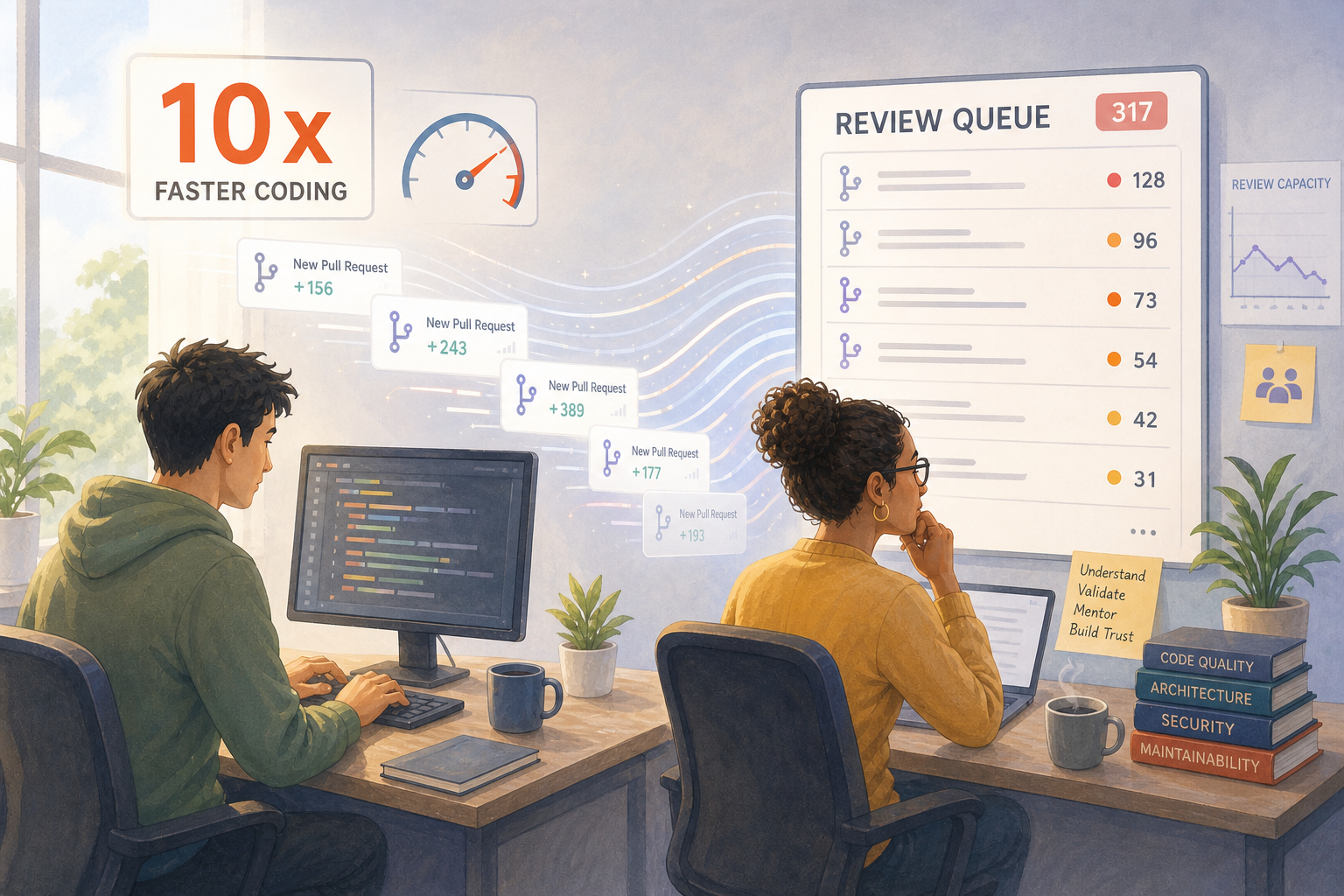
Meanwhile, other data paints an even sharper picture: code churn is climbing, duplication is exploding, and review burden often eats the supposed time savings. More PRs. More code. Not always more value.
What Actually Moves the Needle in the AI Age
The organizations pulling ahead aren't the ones with the highest "AI acceptance rate." They're the ones obsessing over:
- Review quality and speed, because AI multiplies output faster than context
- Architectural clarity, so the generated code doesn't immediately create cognitive debt
- Onboarding acceleration, because AI is legitimately cutting time-to-10th-PR dramatically
- Decision velocity, not just coding velocity
- Measuring outcomes, not activity theater like lines changed, PR count, or "AI code %"
They treat AI readiness as an organizational muscle, not an individual tool adoption checkbox. Strong engineering practices + AI = multiplier. Weak practices + AI = stress test that exposes every flaw at scale.
The future belongs to teams that can orchestrate AI without drowning in its cheerful, well-formatted mistakes.
Your move, engineering leader: Stop worshipping raw activity metrics. Start engineering for leverage and durability.
The tools aren't going away. The question is whether your systems, culture, and leadership are ready to ride the wave, or get beautifully commented into irrelevance.
What paradox are you seeing in your own org? The most insightful or brutally honest comments get the eternal respect of the timeline.