Many organizations have already introduced AI tools for coding, automation, content generation, and decision support. Leaders are seeing individual employees become faster, more creative, and more efficient at handling repetitive tasks. The first signs of productivity gains are often visible.
But this raises a critical question for CEOs, HR leaders, transformation executives, and people managers:
Are your teams simply using AI, or is your organization truly ready to coach and scale AI adoption into measurable business impact?
The difference matters.
AI adoption is about tool usage. It often starts at the individual level: code completion, report writing, idea generation, data analysis, meeting summaries, or customer insights.
AI coaching and readiness is something else. It is about equipping leaders, teams, and the surrounding organization with the skills, structures, and mindset needed for AI to create scalable, safe, and business-driven transformation.
In short: adoption is tool usage. Coaching for AI readiness ensures the entire system, people, processes, and culture, can absorb and amplify AI's potential sustainably.
Without that coaching layer, organizations risk creating more activity without more value.
Why adoption alone often falls short
The first wave of AI in organizations has largely focused on individual efficiency. Employees produce reports faster, generate ideas quicker, and manage routine work with AI assistance.
But as usage grows, the bottleneck shifts.
It is no longer just about how much one person can output. The real limitations begin to appear in knowledge sharing, leadership capability, validation processes, quality control, risk management, and the ability to measure real business outcomes instead of AI activity.
This is where many organizations get stuck.
For example, a product team may start using AI heavily to write user stories, summarize customer feedback, draft specifications, and generate release notes. On the surface, productivity improves. More documents are created, meetings move faster, and individual contributors feel more efficient.
But if managers are not coaching the team on how to validate AI-generated outputs, connect insights to customer priorities, and align decisions across product, engineering, and leadership, the gains can quickly become fragmented. The team may produce more material, but still struggle with unclear priorities, inconsistent quality, duplicated work, and slower decision-making.
In that case, AI has increased activity, but not necessarily improved performance.
AI tools may increase speed, but speed alone does not guarantee better decisions, stronger customer experiences, or improved business performance. In some cases, poorly coached AI adoption can create new problems:
- More content, but lower quality
- Faster output, but weaker validation
- Higher AI usage, but unclear business value
- More experimentation, but fragmented ways of working
- Increased risk around hallucinations, privacy, compliance, or technical debt
This is why coaching for AI adoption has become a strategic priority for leaders. The question is no longer whether people are using AI. The question is whether the organization is ready to turn that usage into impact.
The real leap: From AI usage to coached AI impact
AI tools are powerful, but they are only the starting point. The greater opportunity lies in moving from sporadic individual use to a coached, organization-wide transformation where AI improves decisions, accelerates innovation, and strengthens competitive advantage.
For this to happen, organizations need stronger foundations and leaders who actively guide their teams through the change.
AI performs best with accurate context, clear guidelines, reliable processes, strong feedback loops, human judgment, and business-relevant measurement. Leaders need to help teams understand when to trust AI, when to challenge it, how to evaluate outputs, and how to integrate AI into real workflows rather than isolated tasks.
Without this, AI remains limited to simple productivity gains. With the right coaching, it can support more complex workflows, improve collaboration, and contribute directly to strategic priorities.
Practical AI Coaching & Readiness Checklist for Leaders
Leadership and Coaching Capabilities
Do your managers and leaders have the skills to coach AI-augmented work?
This means more than encouraging employees to try new tools. Leaders need to guide teams on crafting effective prompts, evaluating AI-generated outputs, managing bias and hallucinations, applying human judgment, and linking AI use to team goals.
Without strong coaching, AI adoption remains superficial, inconsistent, and dependent on individual enthusiasm.
Processes and Workflows
Are your processes ready for the increased speed and volume created by AI?
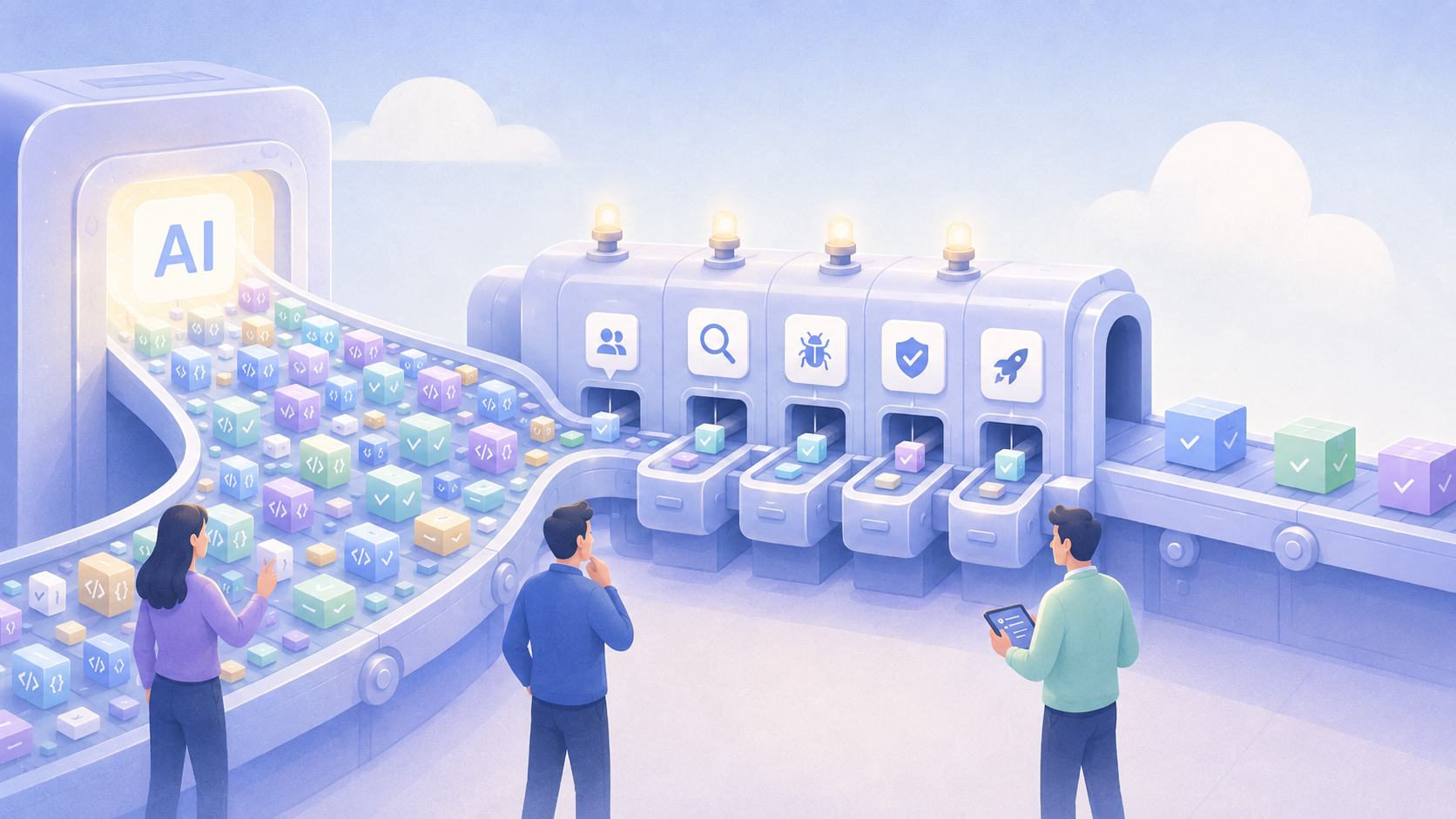
Meetings, decision gates, approval flows, quality checks, and knowledge sharing need to keep pace with higher velocity. Otherwise, AI can simply push more work into old bottlenecks.
A ready organization does not only ask, "How can AI make this faster?" It also asks, "Should this workflow change now that AI is part of the work?"
Knowledge and Context
Is there clear, up-to-date, and accessible knowledge about company strategy, values, customer needs, product direction, and best practices?
AI performs better when it has strong context. Poor context leads to poor outputs.
This makes AI readiness partly a knowledge management challenge. Leaders need to coach teams on how to build, maintain, and use shared knowledge effectively, from internal documentation and examples of good AI use to common standards for prompts and outputs.
Measurement and Impact
Are you measuring AI usage, or are you measuring AI value?
Usage metrics such as number of users, prompts, or licenses may show activity, but they do not prove business impact. More useful measures include faster time-to-market, improved customer experience, reduced manual work, higher quality decisions, better operational performance, or lower cost of repetitive tasks.
Effective coaching helps teams connect AI use to measurable outcomes. Without this connection, AI adoption can look successful on the surface while delivering limited strategic value.
Risk Management and Ethics
Do you have clear frameworks for security, privacy, bias, compliance, and accountability as AI usage expands?
As more employees use AI, risk becomes distributed across the organization. Leaders cannot rely only on central policies. They need to coach responsible behavior in daily work, including what data can be used, how outputs should be validated, where human review is mandatory, and when risks need escalation.
Strong AI coaching helps the organization address these issues proactively rather than reactively.
Culture and Mindset
Does your culture encourage critical thinking, continuous learning, and responsible experimentation with AI?
AI adoption requires more than enthusiasm. Teams need psychological safety to experiment, but also enough discipline to avoid careless use.
Leaders play a key role in modeling the right behaviors: asking better questions, challenging AI outputs, sharing what works, admitting what does not, and keeping business outcomes at the center.
The goal is not to turn AI into a novelty. The goal is to turn it into a trusted, well-governed collaborator.
What leaders should focus on next
The organizations that gain the most from AI will not be those with the highest tool adoption rates. They will be the ones that build the strongest coaching layer and organizational readiness around it.
This means identifying where the current environment supports AI, where it creates friction, which leadership capabilities need strengthening, which workflows should be redesigned, which risks need clearer governance, and which metrics prove real business impact.
For some teams, the priority might be leadership training in AI coaching. For others, it could be improving knowledge management, updating workflows, strengthening governance, or creating clearer measurement practices.
AI coaching and readiness is not a generic training exercise. It is a practical way to understand what needs to evolve so AI can contribute more safely, consistently, and effectively to business goals.
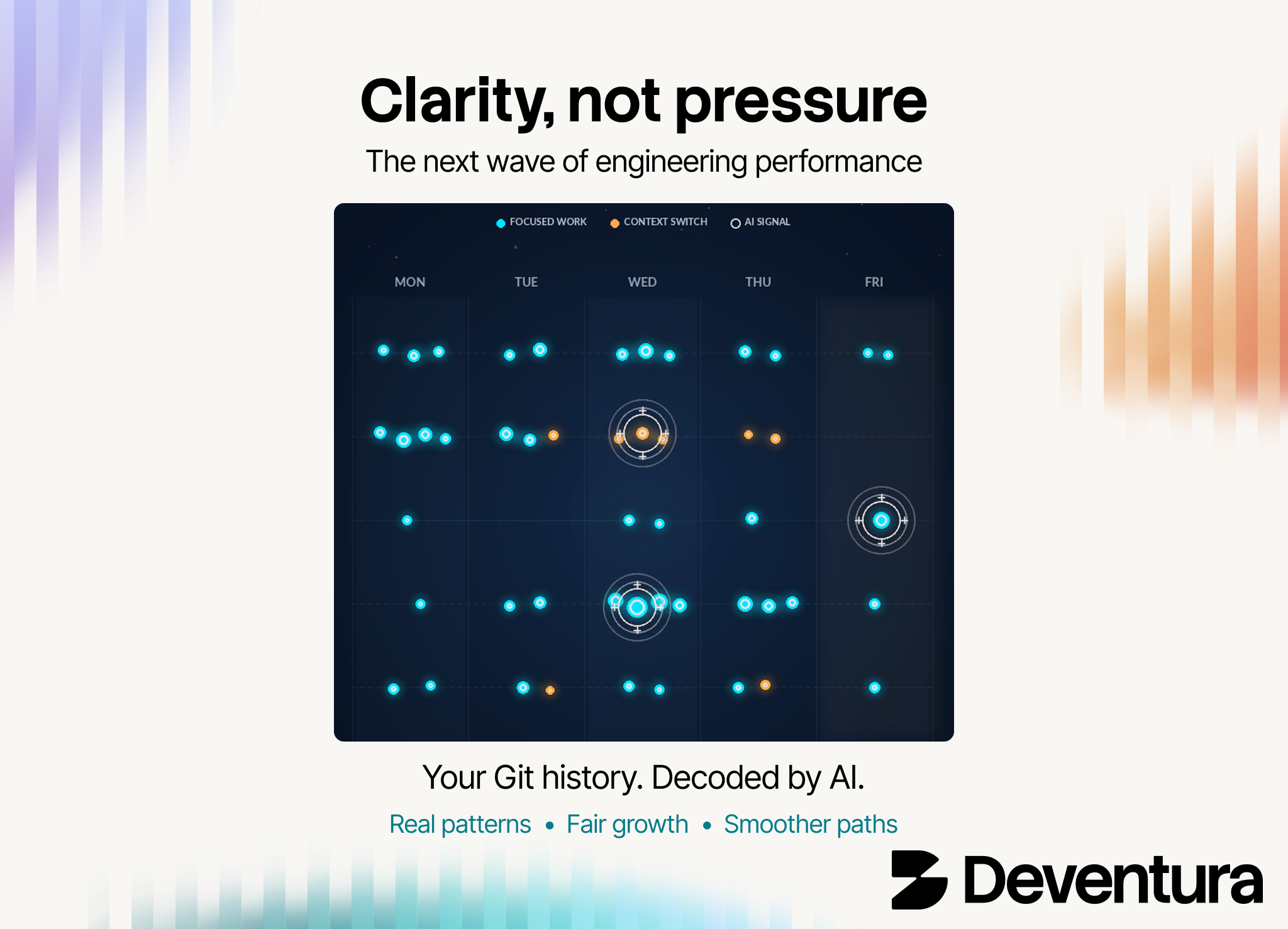
This is also where many organizations benefit from a more structured view of how work actually happens. AI readiness is difficult to improve if leaders cannot see where teams are blocked, where quality risks emerge, or where performance is being created or lost.
From "We use AI" to "We are ready for AI impact"
The gap between "our people use AI" and "our organization is ready to coach and scale AI for real impact" is one of the biggest hidden challenges in businesses today.
Using AI tools is no longer the difficult part.
The harder and more valuable work is ensuring leaders can coach effectively, teams can apply AI responsibly, and the organization can measure whether AI is actually improving performance.
The next AI advantage will not come from who has the most tools. It will come from which organizations can coach people, redesign work, and turn AI into measurable business impact.